J.Z. Ness | Red Phoenix correspondent | Colorado–
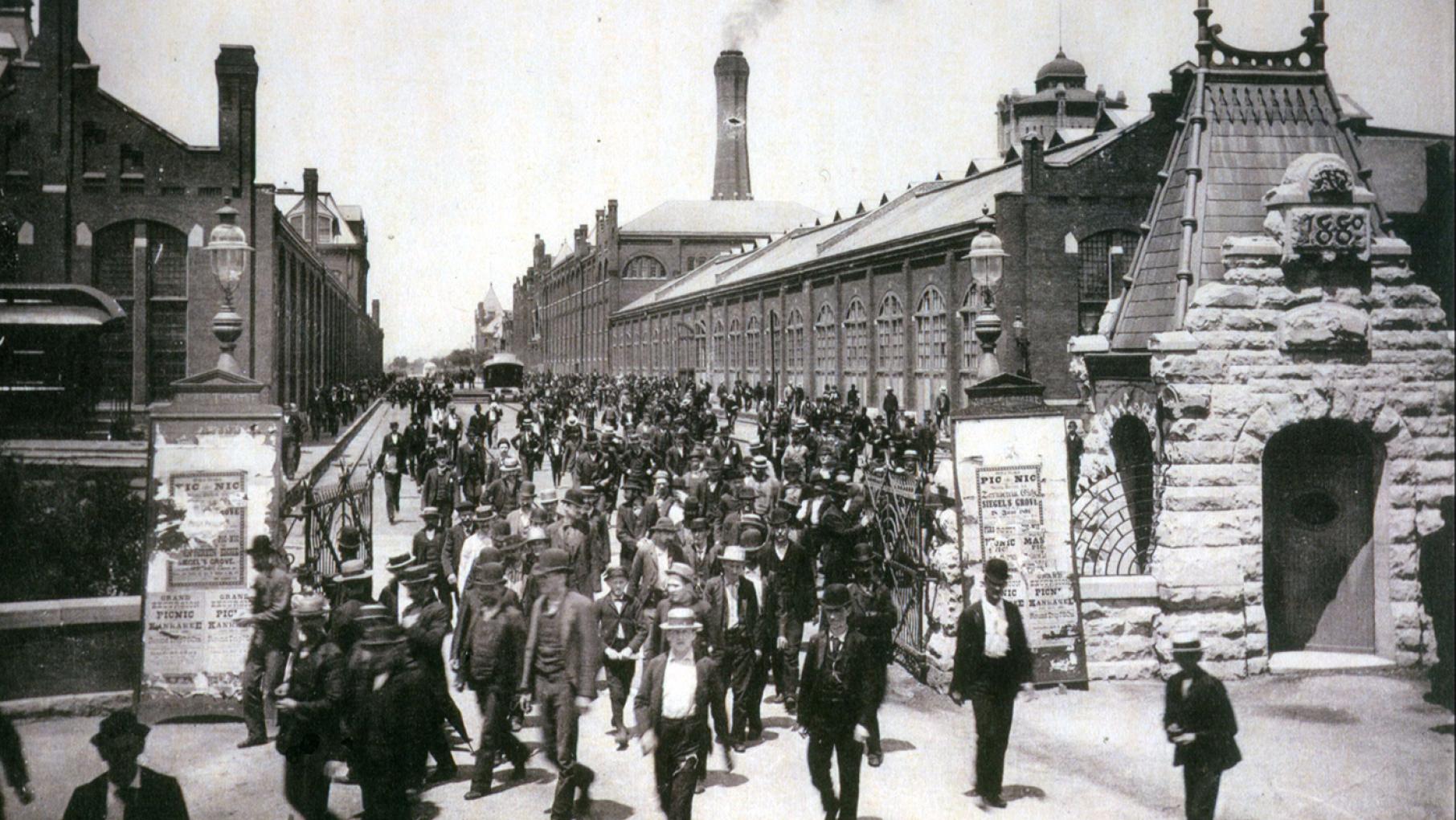
In the summer of 1894, as economic depression devastated working-class communities across the United States, a struggle erupted that would bring the nation’s rail system to a standstill and pit hundreds of thousands of workers against some of the most powerful interests in the country. What began as a local dispute at the Pullman Palace Car Company outside Chicago, where workers faced wage cuts while remaining trapped in an exploitative company town, rapidly grew into a nationwide strike movement fueled by solidarity. The federal government ultimately intervened on behalf of the railroads and industrialists, exposing for everyone to see whose side the government was really on.
The roots of the conflict lay in the Panic of 1893, an economic depression unprecedented in its severity until the Great Depression thirty years later (1929-1939). Millions of people lost their jobs and livelihoods, great destitution spread throughout the country, due ironically to the abundance of goods that could not be sold, and production came to a halt. As demand for new railroad cars plummeted, George Pullman, the owner of the Pullman Palace Car Company, responded by laying off over 2,000 workers and cutting wages for those who remained by roughly 25 percent, on average. However, the company made no corresponding reductions in the rents or prices charged in Pullman, Illinois, the model town built to house its workforce. In these “model towns”, controlled by the company, workers lived in company-owned housing, shopped at company stores, and paid company rates for utilities, all while facing a paternalistic system that left little room for independent decision-making. As workers grew increasingly frustrated, a grievance committee was set up but their attempts to negotiate were rebuffed, and several representatives were fired. On May 11, the workers had had enough and decided to walk out.
The American Railway Union (ARU), led by Eugene V. Debs, provided crucial support. Fresh from a successful strike against the Great Northern Railway, the ARU voted to boycott the handling of Pullman cars nationwide. This action transformed a local factory strike into a systemic challenge: rail traffic across much of the country west of Chicago ground to a halt as 125,000 to 250,000 workers joined in solidarity. The boycott demonstrated the potential strength of industrial unionism—organizing across trades and linking workers in related industries—when faced with the monopolistic nature of modern rail production and transportation. With the capitalists organizing into great monopolies to exploit as much as possible, workers refused to be divided and combined to fight as well.
The response from employers and the government was decisive. Railroad companies, coordinated through groups like the General Managers’ Association, appealed to federal authorities. U.S. Attorney General Richard Olney, who had close ties to the railroad industry, secured a court injunction under the Sherman Antitrust Act, framing the boycott as an illegal restraint of trade. This law, literally made to restrain the growth of massive monopolies, was used to crush workers who were fighting back against them: President Grover Cleveland ordered federal troops into Illinois over the objections of Governor John Peter Altgeld. Clashes in Chicago and elsewhere resulted in dozens of deaths and widespread property damage. Debs and other ARU leaders were arrested for contempt of the injunction, effectively crippling the union’s leadership. By mid-July, the strike had collapsed.
The Pullman Strike’s outcomes were mixed but revealing. In the immediate term, it represented a setback for organized labor: the ARU was broken, blacklisting followed for many activists, and courts established the precedent of using injunctions against strikes. Yet in the long-term, it generated broader public awareness of industrial conditions and contributed to the establishment of Labor Day as a national holiday. A presidential commission later criticized Pullman’s policies, though meaningful reforms were slow in coming. Debs himself, during his imprisonment, deepened his study of socialist ideas, which led to his emergence as one of the most radical and militant voices in the labor movement in subsequent years.
At its core, the events of 1894 highlight class contradictions and antagonisms under capitalism. Workers who produce the wealth of society found their living standards squeezed while owners protected profits and rents. Attempts at purely economic organization, even when tactically innovative through sympathy actions, confronted the combined force of private capital and state power. Although the strike was defeated, it remains one of the most formative strikes in U.S. labor history. The strike underscored the limits of craft or even industrial unionism operating within a system where capitalist terror could be mobilized to safeguard the flow of commerce and property rights above all else. It remains a key chapter demonstrating both the capacity for worker solidarity across distances and sectors, and the challenges such movements face in confronting entrenched economic and legal structures. Subsequent generations of labor organizers would draw important strategic lessons from this episode about organization, timing, and the scope of political engagement.