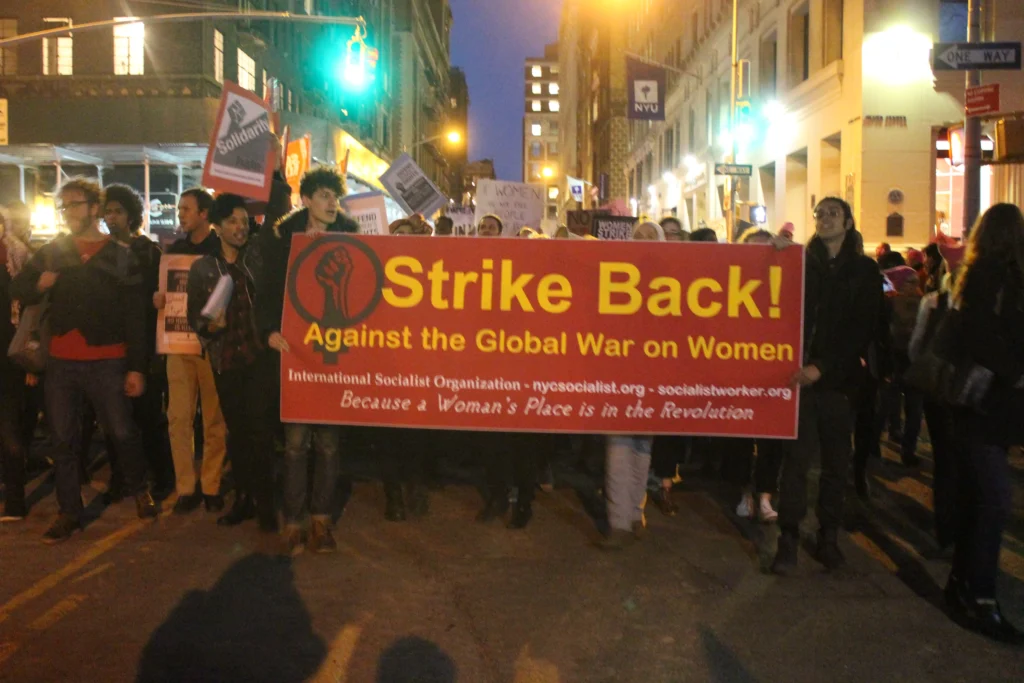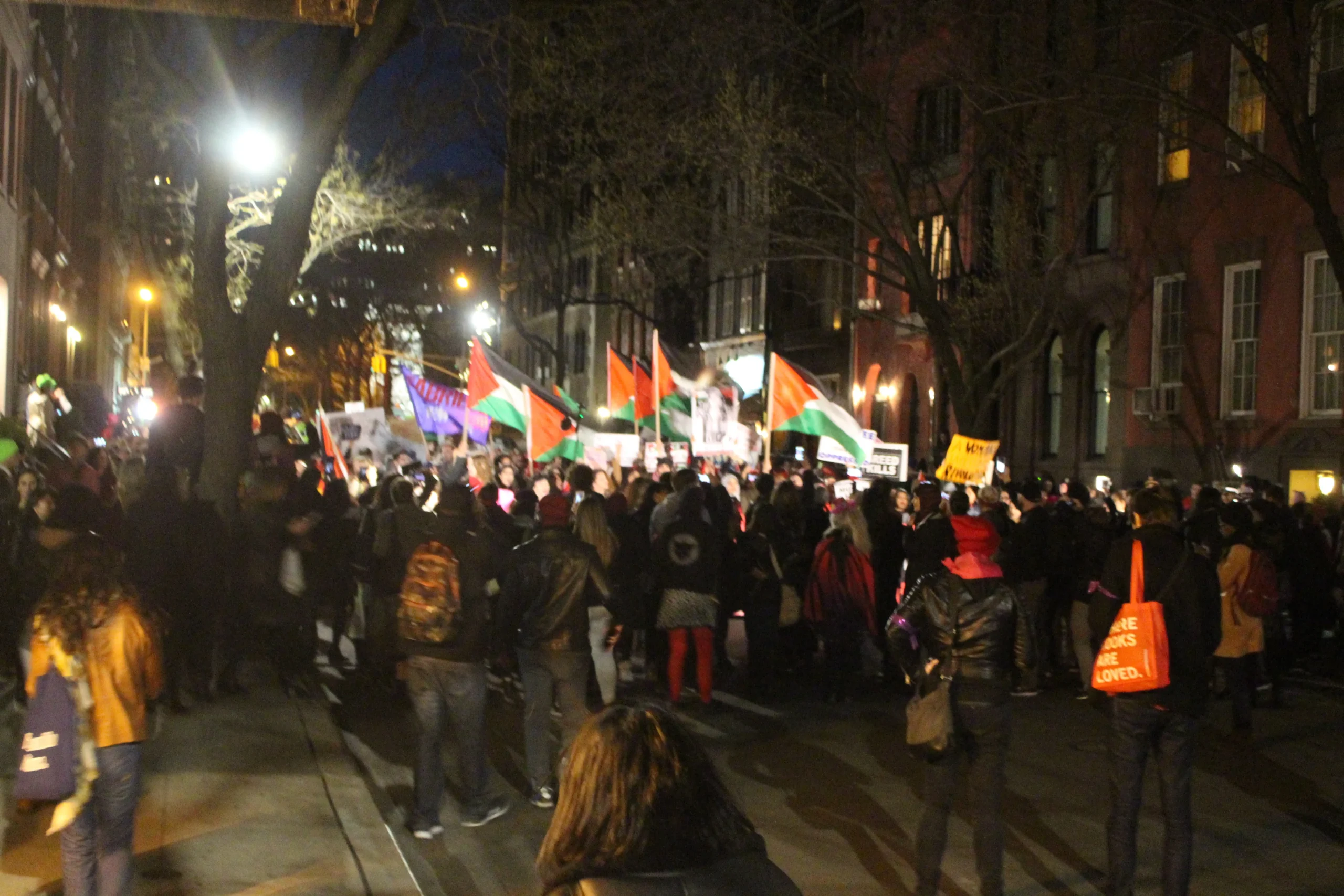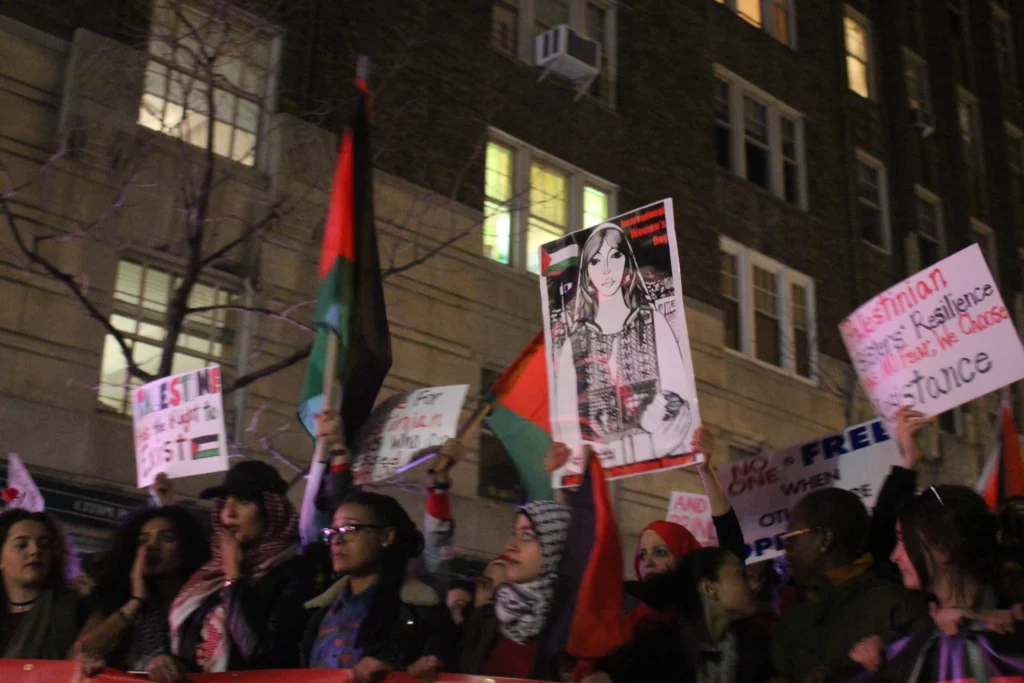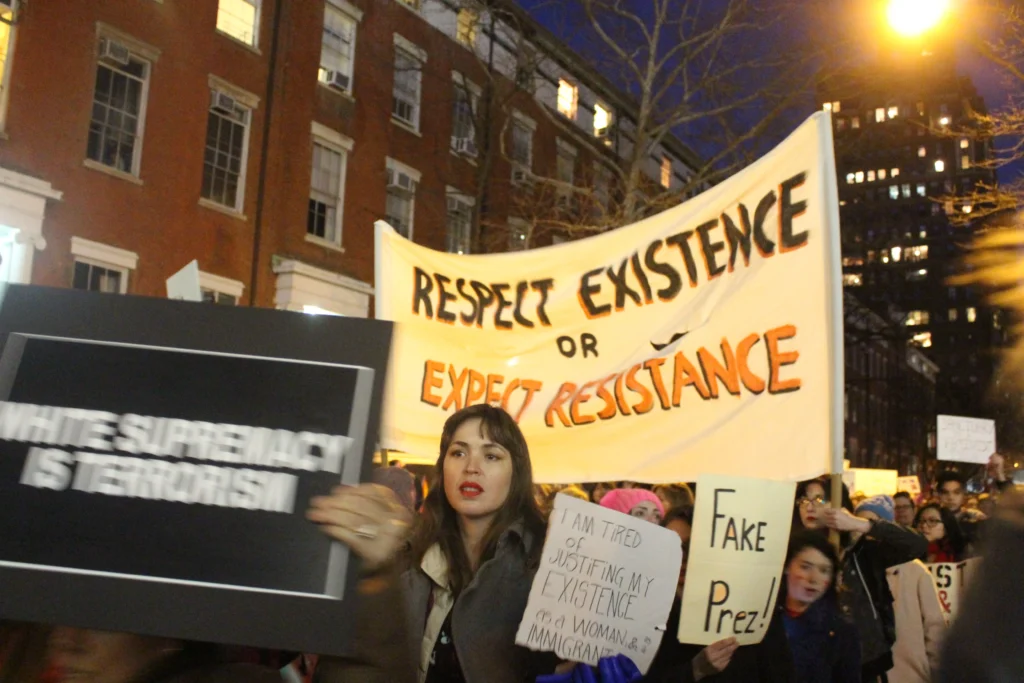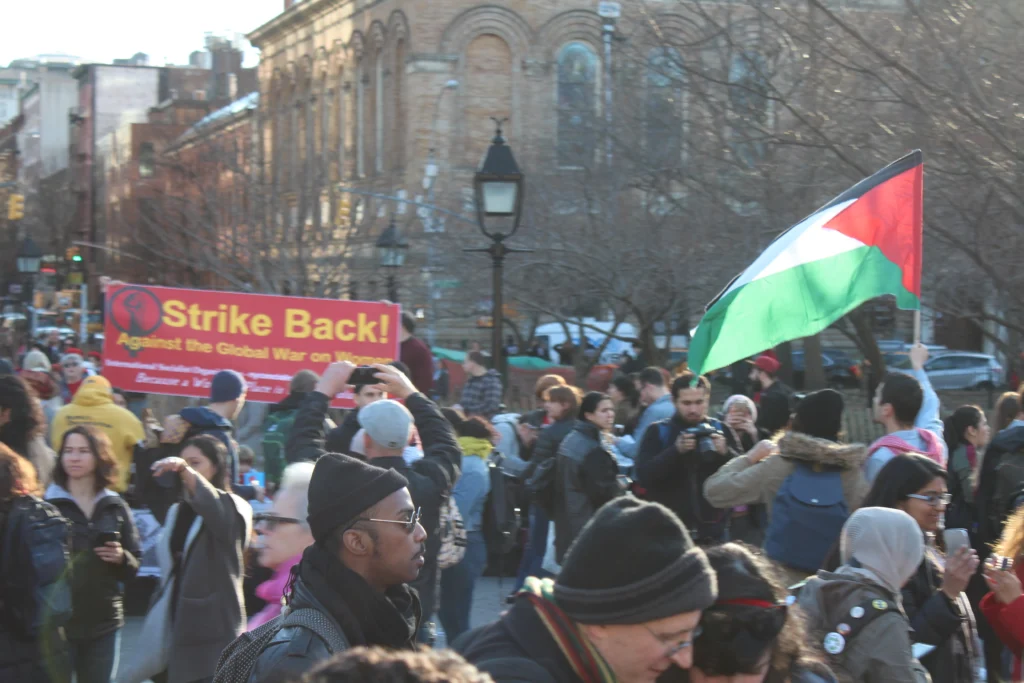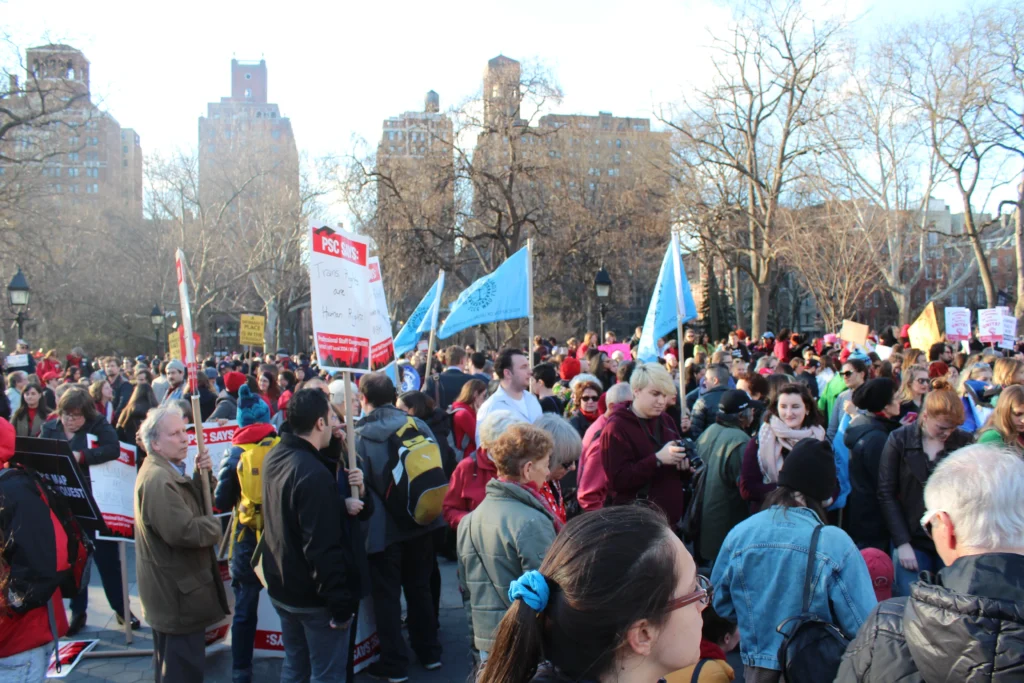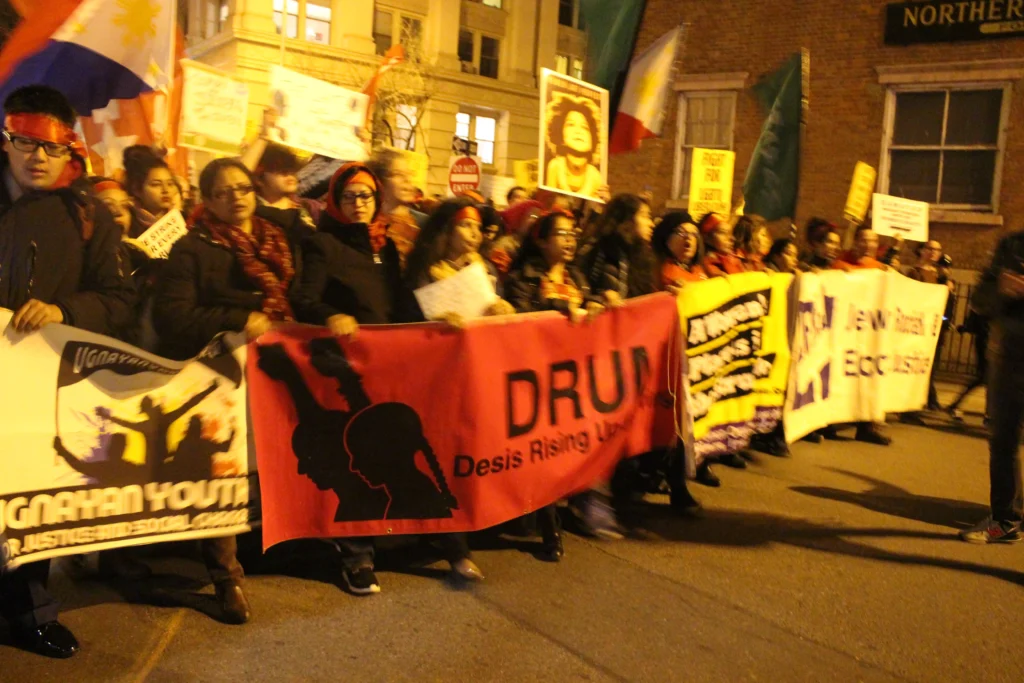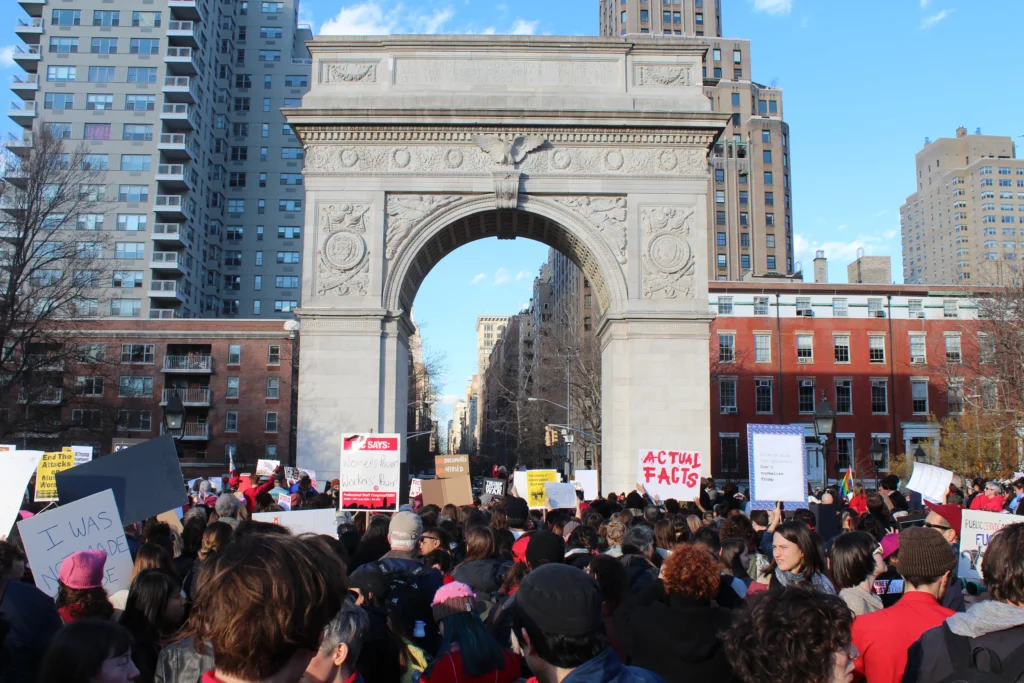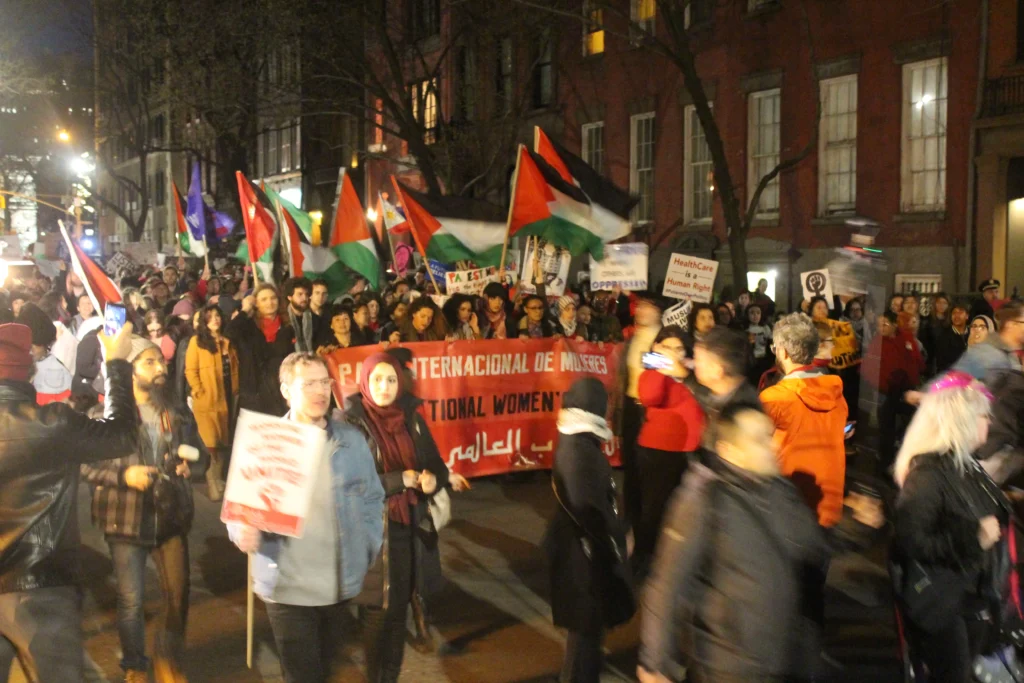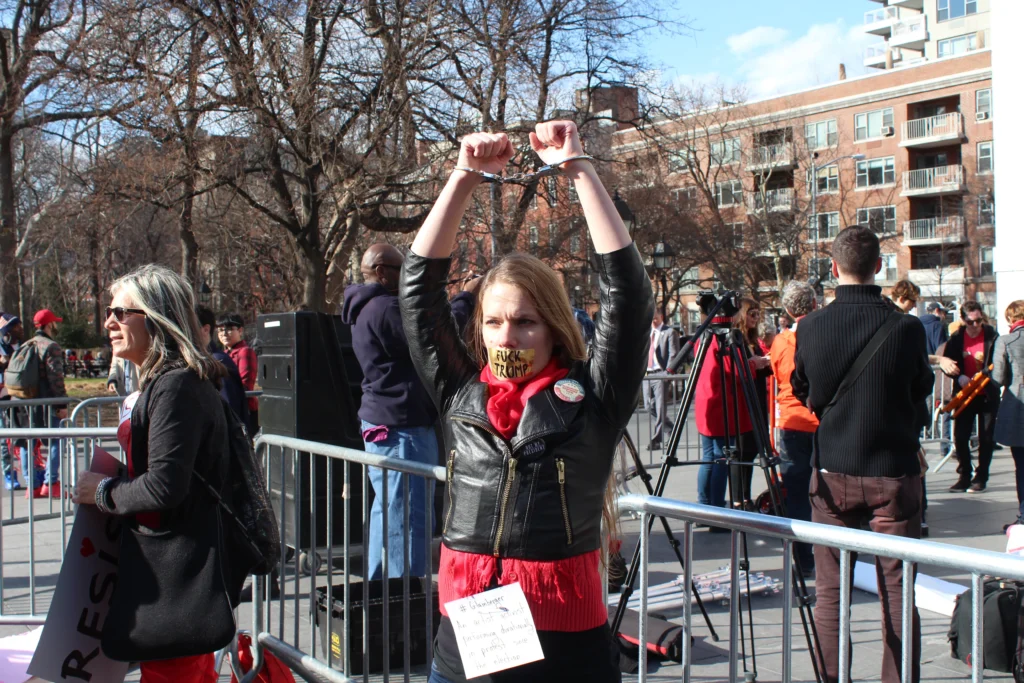


On Wednesday, thousands of people leading by women’s organizations gathered in Washington Square Park near New York University campus. Women of all ages from different national, religious, and ethnic backgrounds were in the park with the call of the platform of International Women Strike. Speakers also reflected the diversity in the demo. From unionists to students, from Palestinians to Kurds, revolutionary women made encouraging and enthusiastic speeches, which are signs of how the struggle in general is going to be shaped in the future. At the beginning of the program, the speaker, Palestinian activist Suzanne Adely, reminded those gathered of the importance and historical character of March 8th in terms of “using economic power of women.” She emphasized also, the importance “to learn a common language, to learn how to work together.” People chanted, “the women united will never be defeated,” “no Trump, no KKK, no fascist USA,” “union rights are human rights,” and “feminists fighting fascists, liberation here it comes.”
The March 8th demonstrations for International Working Women’s Day were also mirror of the past, which can be defined as anti-Trumpism. However, when we had talks with people in the field, it was certain that they are anti-Trumpist, because they see Trumpism as a threat against their rights. One could say, “but they are supporting Clinton, and she is essentially no different.” We can say that there were only a few banners showing their support to Clinton. In this sense, the March 8th demo in NYC was far from some simple machination of the Democratic Party.
Representation of LGBTQ communities was unfortunately low, and there were not so many banners to express solidarity with LGBTQ individuals. However, the initiative of the march made their best move in front of Stonewall Inn, which is the birthplace of the modern LGBTQ rights movement. When they were passing in front of the Inn, the people stopped to memorialize the rebellion.
This 8th of March in New York was politically mature, colorful, and hopeful. In the future, much like after the Occupy Movement, new pressure coming from women’s movement will show itself in the ranks of the struggle for a new world.
But attendance to the strike was mostly from students, academicians, artists, and immigrant workers. In general, life in the NYC was not stopped; the city was still working. Bus services and subways were working. One could not feel it was a day of strike. Weaknesses in the struggle of the working class is apparent. Although UAW and PSC-CUNY joined to the march, their attendance was not that large. A lesson to be learned from this march is that union organizers, militants, and honest activists of working class have to take more initiative in industrial plantations, factories, schools and hospitals in order to build the working class movement.